Nemrég megváltoztattuk az arénák pontszámításának rendszerét a Ferion portálon. Az új rendszer kibővült: a pontozás mostantól több statisztikán alapul, nem csupán a birodalmak végső népességén. Úgy véljük, sokkal jobb, izgalmasabb és igazságosabb a játékosok számára minden szinten.
Mi volt a baj a korábbi rendszerrel?
Ahhoz, hogy valaki megnyerjen egy arénát a Ferionban, birodalmának a teljes népesség legalább 50%-át kell uralnia. Ennek a küszöbnek az átlépése egy játékos abszolút fölényét mutatja a többiek felett, és nem hagy kétséget afelől, ki a bajnok. Ha egy birodalom átlépi ezt a határt, a többi játékos számára – még közös erővel is – szinte lehetetlenné válik letaszítani a győztest, amennyiben az 24 órán át a népesség több mint 50%-át meg tudta tartani.
Ez jó módja a győztes kiválasztásának, de azt is jelenti, hogy a többi játékos osztozik a maradék 50%-on (sok esetben ennél jóval kevesebben). Ezzel a győztes hatalmas pontelőnyre tesz szert: mindig több népessége – és így magasabb pontszáma – lesz, mint az összes többi játékosnak együttvéve.
A valóságban azonban ennél sokkal rosszabb a helyzet. Összegyűjtöttem a legutóbbi játékok statisztikáit, ezeket az alábbi táblázat mutatja. Azt jelzi, hogy a birodalmak hány százaléka fejezte be a játékot nullánál nagyobb népességgel. Az utolsó oszlop azt mutatja, a játékosok hány százalékának volt jelentős népességaránya – vagyis legalább a győztes teljes népességének 10%-a.
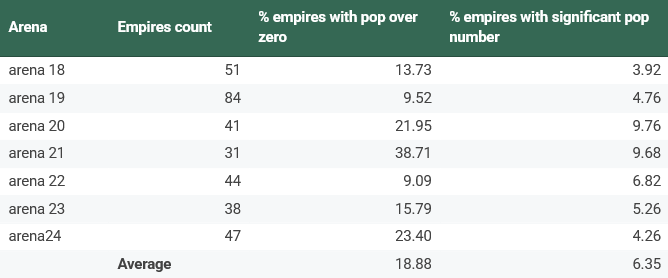
Mint látható, átlagosan a játékosok mindössze 19%-ának van a végén bármennyi népessége, és csak nagyjából 6%-uk tartja azt jelentős szinten. Átlagosan 48 játékossal számolva ez azt jelenti, hogy minden arénában összesen 3 birodalom zár kielégítő eredménnyel.
Úgy gondolom, egy ilyen pontrendszer igazságtalan a játékosok többségével szemben. A Ferion sok órányi elköteleződést kíván, mégis úgy készült, hogy csak egyetlen ember (a jövőben pedig egyetlen szövetség) nyerhessen. Mi legyen a többi birodalommal, amelyekre a játékosok szintén rengeteg időt szántak? A Ferion összetett játék, amelyben egy birodalom sokféle irányban fejleszthető. Semmi sem akadályoz meg minket abban, hogy jóval szélesebb körben értékeljük és jutalmazzuk a játékosok erőfeszítéseit – mindaddig, amíg a győztes összpontszáma a ranglista élén tartja.
Mi áll az új rendszer ötlete mögött?
Az új pontrendszer három fő elven nyugszik:
Az arénát megnyerő játékosnak (akinek a legnagyobb a népessége) a ranglista élén kell állnia, amely további kategóriákat is tartalmaz
A rendszernek a játékosok játék közbeni összteljesítményét kell értékelnie széles, de ésszerű körben
A pontozás szabályai legyenek egyszerűek és világosak
A fenti feltevések (közvetetten) egy további feltételt is megkövetelnek: az egyes kategóriák pontjainak összeadhatónak kell lenniük, hogy minden játékos végső pontszáma kijöjjön. Ez nem teljesen kézenfekvő, hadd szemléltessem egy példával:
Mi történik, ha a pontozott kategóriák közé felvesszük a betelepített bolygók számát? A győztes népessége tízezres nagyságrendű, míg a betelepített bolygók száma legfeljebb néhány száz. Itt nagy a léptékbeli különbség. A betelepített bolygók számának puszta hozzáadása a népességhez nem változtatna az összpontszámon. Fordítva viszont a harcban okozott sebzés (amely milliós nagyságrendű) hozzáadása jelentősen befolyásolná a végeredményt.
Az itt alkalmazott megoldás a pontszámok skálázása. Egyszerű elven működik, kategóriánként külön-külön:
Határozd meg az adott kategóriában elérhető maximális pontszámot. Például 1000.
Keresd meg azt a játékost, akinek az arénában a legmagasabb értéke volt ebben a kategóriában. Ő kapja a maximális pontszámot (példánkban 1000-et).
A többi játékos arányosan kevesebb pontot kap (az arány nem lineáris, a részletek később).
Ismételd meg minden kategóriára (ahol más-más maximális pontszám is választható)
Más szóval az okozott sebzés példája mindig 1000 pontra skálázódik, függetlenül attól, hogy a győztes játékos 10 milliós vagy 100 ezres sebzést vitt be. Ugyanígy skálázódik a betelepített bolygók száma, a népesség és minden más paraméter.
Fontos az is, hogy a skálázáson belül egyes kategóriáknak több pontot adhatunk. Ez egy súlyozási rendszerhez hasonlítható. Az említett népességnek a többi kategóriához képest nagyon nagy súlyt kell kapnia, hogy a legnagyobb népességű játékos nyerjen. A kreditet ezzel szemben nagyon könnyű megszerezni, így a végső pontozásban nem szabad akkora jelentőséget kapnia, mint például az új technológiák megszerzésének.
És a részletek?
Most, hogy elmagyaráztam az új rendszer működését, nézzük a részleteket. Mely kategóriákat pontozzuk jelenleg, és mennyi pont szerezhető bennük? Az alábbi kép egy pókháló-diagramot mutat a hat fő kategóriával, amelyekben a játékosokat értékeljük.
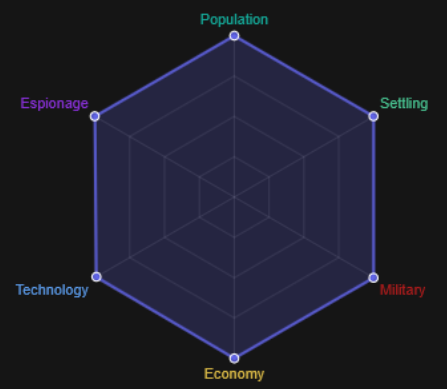
MEGJEGYZÉS: a kategóriák száma és a részletes pontértékek a jövőben változhatnak, az általános szabályok azonban érvényben maradnak
A legtöbb kategóriában több szempont is van, amelyekért a játékosok jutalmat kapnak. A pontos részleteket az alábbi táblázatban találod:
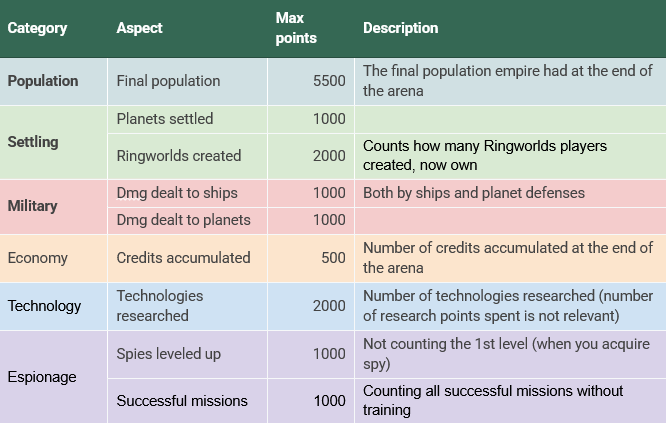
Mint látod, jelenleg 14 000 pont szerezhető, ennek egyharmada jut a népességre. A súlyok ilyen elosztása lehetővé teszi, hogy az arénát megnyerő játékos megtartsa a vezetést. Egy ilyen játékos a játék más területein is jól teljesít, így a többi szempontban is jó pontszámot érhet el. A többi kategóriában legfeljebb 2000 pont szerezhető, kivéve a gazdaságot, ahol a maximum 500.
Hogyan lesz egy értékből pontszám?
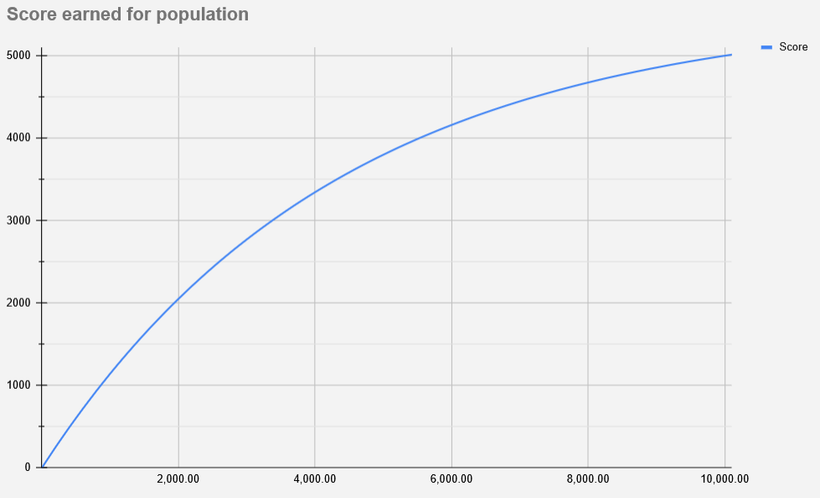
Vegyük példaként a népességet. Mint említettem, egy birodalom a népességből legfeljebb 5000 pontot szerezhet.
Mivel a győztesnek 10 000 népességpontja 5 000 pontot ért, a legegyszerűbb módszer a többi játékos népességének átváltására a lineáris skálázás lenne. Például a győztes népességének 10%-ával rendelkező játékos a pontok 10%-át kapná; aki 20%-nál tart, az 20%-ot, és így tovább. A Ferionban azonban exponenciális növekedési mechanizmusok működnek, például a technológiák ára 10 kutatóponttól egymillióig terjed. A flották támadóereje óriási különbségeket mutat a korai kis erőktől a késői dreadnoughtokig. Emiatt a lineáris skála a játék minden területén csak elégtelenül tükrözné a játékosok teljesítményét.
Ezért használtam exponenciális skálát arra, hogy minden értéket a hozzá tartozó pontszámmá alakítsak. Az elején gyorsan nő, a második felében pedig lelassul. Alább bemutatom, pontosan hogyan működik ez a példánkon:
A végeredmény?
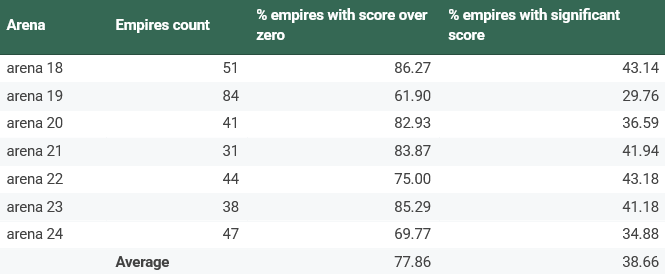
Ahogy korábban említettem, a régi rendszerben a játékosoknak csak nagyjából 6%-a ért el jelentős pontszámot (a győztes pontjainak legalább 10%-át). Hogyan néz ki ez most? A játékosok átlagosan 77%-a (a korábbi 19%-kal szemben) nullától eltérő pontszámot ért el, és 38%-a jelentős mennyiségű pontot szerzett. Ez a pontok eloszlásának jelentős javulását mutatja: a játék a játékosok sokkal nagyobb részét jutalmazza, és jobban tükrözi a hozzájárulásukat és a belefektetett munkát.